

An American Castle: Gillette Castle State Park
Visit a captivating castle in Southern Connecticut, designed as a testament of love from an actor to his wife. Uncover the story behind this enchanting landmark.

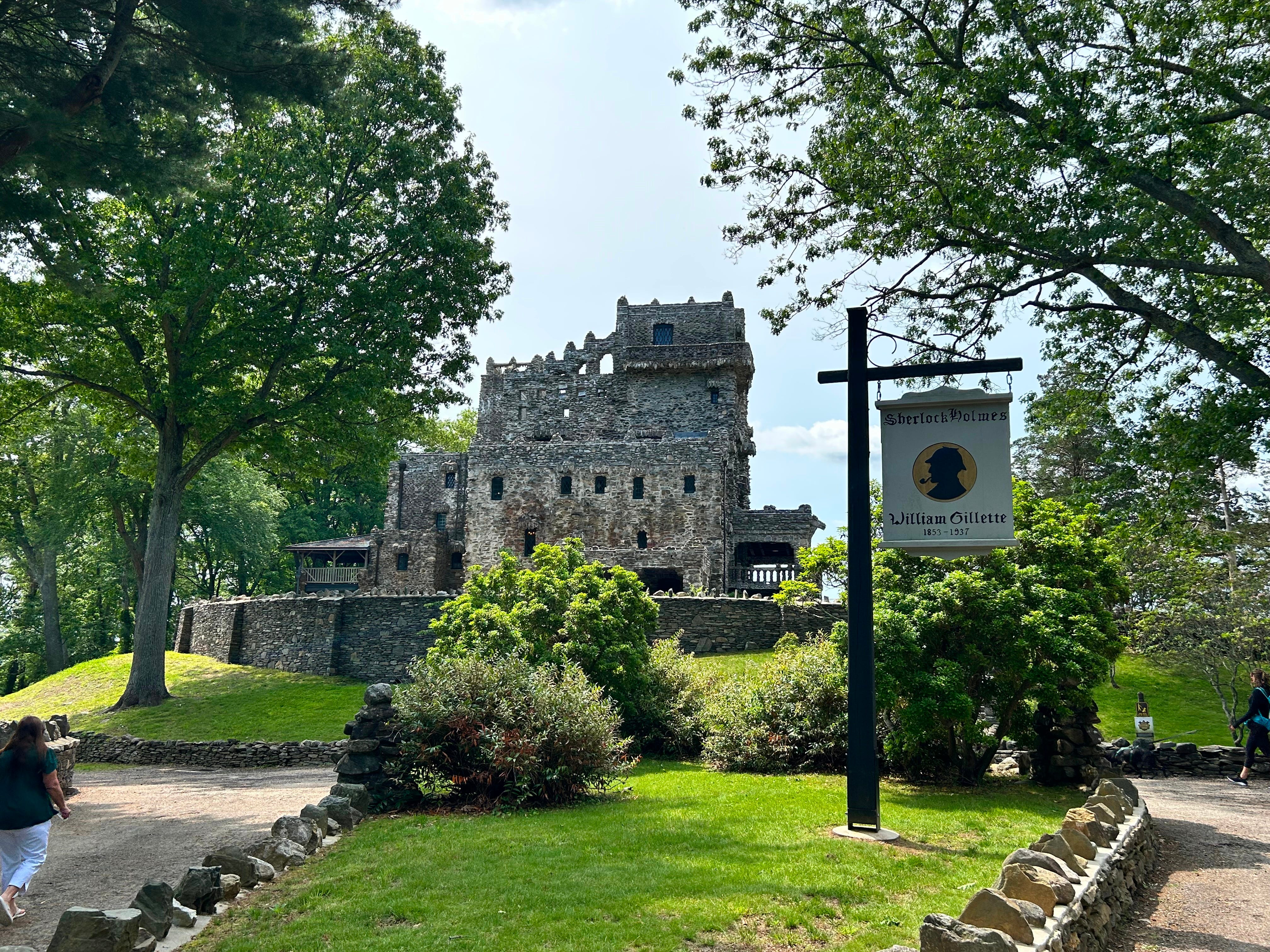
When I think of castles, I generally think of the numerous castles that are still standing, and some in ruins, in places like France, Scotland and Spain. These glorious structures date back to medieval times and were primarily built for defense, serving as fortified residences for nobility but also as a means to exert control over the surrounding lands. The process often began with careful site selection, often on elevated ground or near water sources, to enhance both visibility and accessibility. Skilled craftsmen and laborers employed a variety of materials, including stone, timber, and earth, to create thick walls, towers, and moats that would withstand sieges and attacks. The design of castles would evolve over the centuries, incorporating features such as arrow slits, drawbridges, and fortified gates, which not only provided security but also showcased the power and wealth of their owners. In America, our take on castles is the many mansions that were inspired by the concept of castles. However, not all castles were built for warfare and opulence; one notable castle was commissioned by an actor as a gift for his wife and has since become one of Connecticut's most remarkable State Parks. In this post, i'll take you on a tour to experience the extensive and beautiful Gillette Castle State Park.


Making A Grand Entrance: The First and Second Floors
Now known as Gillette Castle State Park, this site was initially designed to resemble a castle, although it was commonly called the 'Seventh Sister'. It was commissioned by William Gillette, an actor renowned for his portrayal of Sherlock Holmes, and who significantly influenced the evolution of modern acting, moving from melodrama to the realism evident in today's performances.
Built between 1914 through 1919, this 184-acre castle estate nestled along the Connecticut River was originally called "Seventh Sister Castle" by Gillette and those who knew him. The name came from the castle estate's location upon the Seventh Sister, a series of seven hills along the East bank of the river.
A man of many talents and full of creative flair, Gillette designed and oversaw the construction of the castle and also created many of the adornments that can be found within. Wooden light switches, roll-away tables, crafty mirrors, and even secret passageways all designed by Gillette make the home truly into a medieval-style castle from the Old World.
Designed in a medieval gothic architectural style, the outer facade of the structure uses local Connecticut field stone. Several beautiful field stone structures also dot the premises, including the Grand Central StationGillette Castle: History of the Castle
https://www.gillettecastle.info/castle-history
Upon entering, you are greeted by a dim and atmospheric setting that defines the castle's character. This was a deliberate choice. Built over five years with steel I-beams, the castle's walls were constructed around these supports. The front door and its mechanisms, including the switches, are made entirely of wood. Unlike traditional castles, this one features modern amenities such as electricity and heating, with warmth flowing through the stone walls. As you ascend the stairs, you'll find his workshop to your left, and directly in front of you, a series of switches that control the 'secret passage.' This concealed staircase is adjacent to the entrance where Mr. Gillette would greet guests on the ground floor, allowing them to leave their steamer trunks in the alcove. While they were briefly distracted, he would 'mysteriously appear' on the second floor, much to their delight.


As you ascend the stairs, you will encounter "The Great Room," which served as Mr. Gillette's "living room." This space was designed for entertaining guests, featuring a card table and a unique "cat castle" where Mr. and Mrs. Gillette's beloved cats enjoyed their very own wooden "castle." Since the couple did not have children, their cats became their cherished "children," living lives of luxury (or perhaps nine lives!). Continuing your journey through this second level past The Great Room, you will come across a quaint greenhouse, followed by the butler's quarters and kitchen area, which boasts a dining room table on tracks for easy movement. I previously mentioned the basement workshop located to the left as you ascend the stairway to enter the castle. Mr. Gillette, a notably tall man, had a second-floor office that includes a "stairway to nowhere," designed to conceal the square hole in the ceiling created by his 6-foot-3-inch height, which would otherwise hinder his ability to work in the basement workshop. A hole in the wall was constructed to allow him to stand and work comfortably, while that "stairway to nowhere" on the opposite end provided the necessary access for him to do so.




Top of the Rock: Third Floor and the Top Level
The third floor contains a series of bedrooms and spare rooms, and as you head upstairs to see the rooms on the third floor, you’ll notice the hallway is quite thin and will likely fit one person as they walk through.
Each bedroom is depicted in a unique color, beginning with the Green bedroom, which belonged to Mr. Gillette’s niece. Since Mr. and Mrs. Gillette did not have any children (unless you consider their 14-17 cats as kids!), Mr. Gillette shared a strong bond with his niece, Margaret Warner, who often visited the castle. As an uncle to my own nieces, with whom I share a close relationship, I connected on a personal level to this anecdote.


Next to the Green bedroom was the Blue bedroom, intended for overnight guests. This bright corner room was designed to host extended family members as well as young actors and actresses who needed a place to stay while working with Mr. Gillette. It is also connected to a large bathroom, ensuring that guests had the privacy they needed.
The last stop was Mr. Gillette’s bedroom, a relatively small space that features a design theme consistent with the grand room below, adorned with wood and hand-drawn artwork on grass wall matting. With the constraints of space, Mr. Gillette maintained a high level of organization through cleverly concealed closets and swing-out drawers. Perhaps he also set a standard for efficient packing!
Additionally, there is an "observation deck" situated between the staircase and the balcony, equipped with mirrors that enabled Mr. Gillette to keep an eye on his guests in the great room. As illustrated in the photos, the view is quite impressive.


On the uppermost floor, you will find Mr. Gillette's art collection, which includes artistic depictions of his stage performances, his letters to other actors displayed in glass cases, and an extensive library. If you are a carpenter or know someone passionate about woodworking, they will be in awe of this location and the craftsmanship involved in its construction.

Walking the Gillette Castle Grounds and It Once Had A Railroad!
After completing the tour, you will exit out to a pavilion, and walk further and you will see a gorgeous view of the Connecticut River. Personally, I enjoy standing and looking out at the river as it is incredibly serene and peaceful.


If you choose to bring lunch to the park with you, there is a pavilion area adjacent to the castle where there are four picnic tables. While it won’t shield you from rain and is not safe during thunderstorms, it does provide some respite from the sun and walking through, I noticed it was slightly cooler than the outside. Also, if you notice on top of the entrance, you’ll see two cat statues looking down at you.


The state park features a variety of hiking trails, with one trail standing out as it follows a 3-mile stretch of a former train line where Mr. Gillette operated both a steam and an electric train on this narrow gauge track. Mr. Gillette had a passion for trains and maintained scrapbooks filled with pictures and stories about them. The train tracks originated at "Grand Central Station" located on the property, winding around the double gates, with the endpoint being "125th Street Station," which served as an observation platform overlooking the Connecticut River. If these names ring a bell, it's because these "train stations" were inspired by actual train stations in New York City. Ever the showman, Mr. Gillette designed the electric trains to mimic steam trains, and the track featured tunnels, wooden trusses, bridges, and observation platforms. One of the restored electric trains is currently on display at the visitor center.
Gillette Castle State Park is located on 67 River Rd in East Haddam, CT. It is close to State Route 9, and within driving distance of Interstate 95. The grounds are open year round from 8am to sunset, including the hiking trails. If you're interested in experiencing a castle tour for yourself, the castle offers tours every day of the week from Memorial Day Weekend in late May to Labor Day Weekend in early September. There are plenty of tour guides at the entrance and throughout the castle's rooms, making it somewhat self-guided, but are always available to answer any questions. Castle Tours are available for purchase on the CT State Parks website. For more information on hiking tours and additional information, check out the wonderful nonprofit Friends of Gillette Castle State Park
