

Pouring Out the Ketchup at the Heinz History Center
What do Mister Rogers, Heinz ketchup, and the glass industry all have in common? Find out at the Senator John Heinz History Center in my review of this unique history museum.

I have always felt a connection to Pittsburgh and its unique history. Growing up in a historic factory town in Connecticut, I observed the evolution of a once-bustling industrial city as it faced the difficulties of a post-industrial age. The evolution of Pittsburgh is a fascinating journey that reflects its transformation into the vibrant city we know today. Originally founded in the mid-18th century at the confluence of the Allegheny, Monongahela, and Ohio rivers, Pittsburgh quickly became a strategic military and trading post. The 19th century saw the city flourish as a hub for steel production, earning it the nickname “Steel City.” This industrial boom attracted a diverse population, leading to a rich cultural tapestry. However, as the steel industry declined in the late 20th century, Pittsburgh faced significant economic challenges. In response, the city reinvented itself, focusing on technology, healthcare, and education, ultimately emerging as a model of urban revitalization and resilience. The Senator John Heinz History Center in Pittsburgh stands as a testament to the rich history of Western Pennsylvania. While the building is topped with the classic Heinz sign, it is named after the late Senator who tragically died in a plane crash in 1991. Let’s explore some of the incredible highlights of one of my favorite history museums.

A Clash of Empires in Pittsburgh
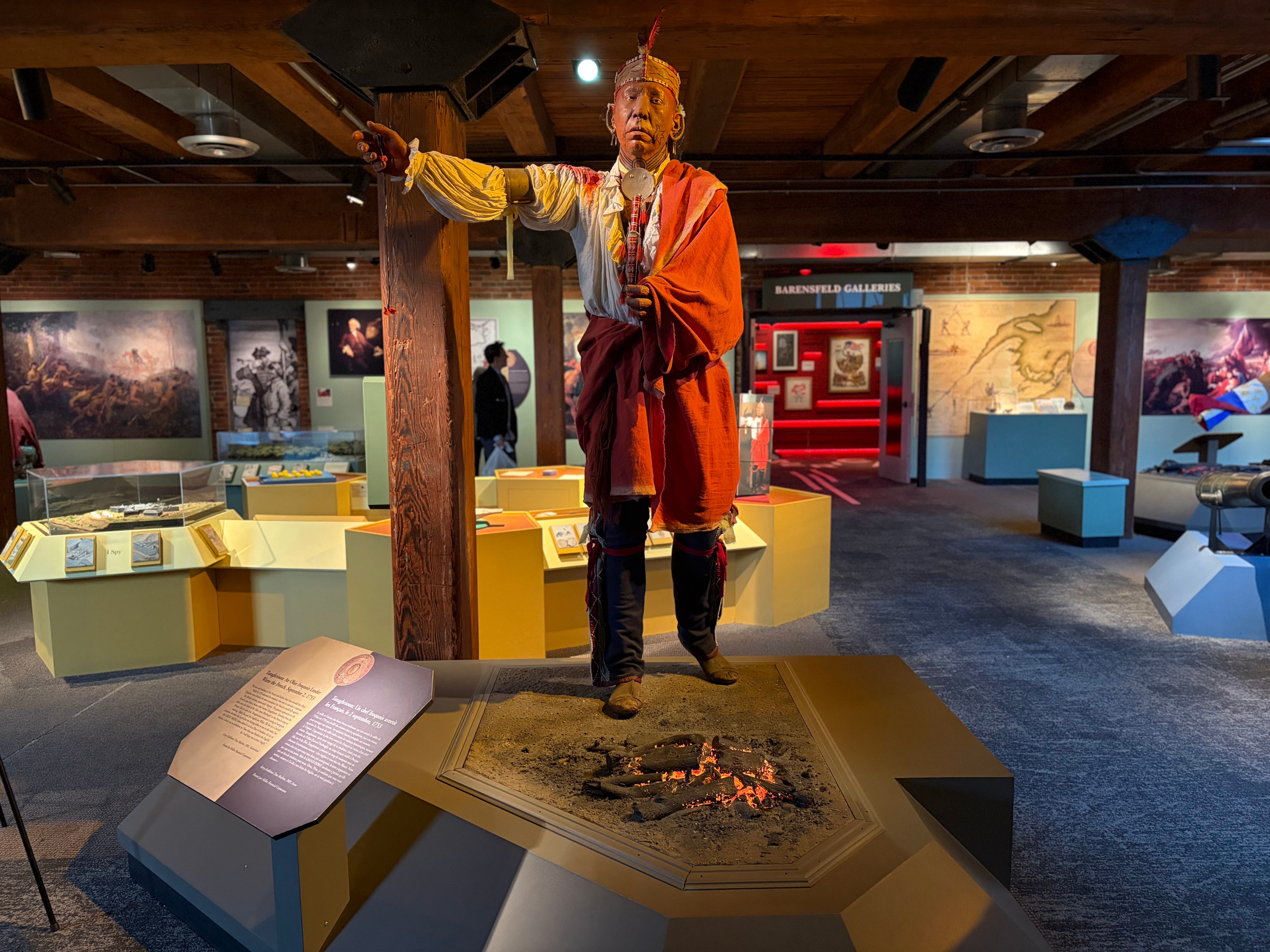
As you step out of the elevator on the fifth floor, you are welcomed by a remarkably lifelike mannequin of Tanaghrisson, the Ohio Iroquois leader. This marks the beginning of the Clash of Empires exhibit, which highlights the British, French, and Indian Wars, all of which converged in what is now recognized as Western Pennsylvania during that era.


Other lifelike mannequins representing various figures from the war are showcased, including George Washington, a Hungarian Red Coat soldier, and a former slave from Massachusetts who fought at Lake George. The narratives are captivating, and I was pleased to see a history museum address the diverse individuals and viewpoints of the war, without necessarily placing an opinion or judgement on the war itself. Additionally, there are many text and photo displays, along with video screens presenting dramatizations of the conflict.


The back galleries known as the Barensfeld Galleries usually has a temporary exhibit. During my particular visit, America 250 was on display and featured numerous paintings that took on a nuanced and balanced view of American society in this time.
Pro Tip: Take a left when you exit the elevator onto this floor, and go up the ramp. On a nice day, you’ll get a beautiful view of the city including some of its numerous bridges over the rivers.


From Slavery to Freedom


Most if not all American history museums have a slavery exhibit, and for good reason. It’s a shameful but essential part of American history where it is necessary to not be ashamed of it, but to use it as a teaching tool so it never returns and never comes back in future generations. This exhibit on the fourth floor offered a local connection in that many slaves who sought freedom would end up in not only Ohio but Western Pennsylvania. One huge takeaway for me was that post-abolition of slavery, there was also an extension of slavery that existed in Pennsylvania known as “indenture”, which existed until the Civil War. In my study of slavery in college, I was always fascinated with the shades of gray between free states and slave states, and this made me think more about how “free states” weren’t always so free.
Shattering Notions: Glass Making in Pittsburgh


Did you know Western Pennsylvania were home to several glass factories in the late 18th century? In fact, Western Pennsylvania emerged as a significant hub for glass manufacturing, thanks in large part to its abundant rivers that provided essential resources for the industry. This region was bustling with activity as skilled artisans crafted a wide array of glass products, ranging from elegant vases and sturdy pitchers to intricate lamps and lighting fixtures. The craftsmanship of these glassmakers not only catered to local demand but also contributed to the broader market, showcasing the artistry and innovation of the time. Modern manufacturers have embraced the historical techniques that defined the region's past while integrating contemporary advancements in technology and design. This blend of old and new allows for the creation of high-quality glass products.
Walking Through Mister Rogers’ Neighborhood
For many of us - myself included, the essence of our childhood was captured in the gentle charm of “Mister Rogers' Neighborhood”. Fred Rogers, the beloved host, was not only a television icon but also a proud native of Pittsburgh, where he spent his formative years. His deep connection to the city is palpable throughout the series, as he often infused the episodes with the spirit and values of his hometown. Pittsburgh, with its iconic skyline and numerous bridges, serves as a significant backdrop, enriching the narrative with a sense of place and community that resonates deeply with viewers.


This thoughtfully curated collection pays homage to both Fred Rogers and his groundbreaking show, highlighting how he seamlessly wove elements of his hometown into each episode. From the gentle cadence of his voice to the inviting decor of the Neighborhood of Make-Believe, every detail was meticulously crafted to create a warm and inviting atmosphere. Rogers had an extraordinary ability to address complex emotions and social issues with simplicity and grace, making profound concepts accessible to children. His emphasis on kindness, understanding, and acceptance not only reflected the values of Pittsburgh but also fostered a sense of belonging among his audience. You’ll feel that very same feeling seeing this exhibit, and connecting with that inner child in all of us.


Is That A Giant Ketchup Bottle?!!


A remarkable feature of this museum is the Heinz exhibit, which highlights one of the largest companies globally that has called Pittsburgh home for many decades. I was captivated by how Heinz leveraged other local industries to create their iconic products. For instance, the glass bottles were crafted from clear glass to beautifully display the product inside. Everything, from the product itself to its marketing, was designed to project a sense of strength. One part of this exhibit that I particularly enjoyed was exploring the various products that Heinz has manufactured over the years from different parts of the world. Additionally, there’s an impressive tower made of glass Heinz Ketchup bottles, known as the Heinz Ketchup bottle tower, that rises majestically.
Why do I Enjoy the Senator John Heinz History Center?


I have always been a big believer in making history fun and approachable, as it can be a very dry and dull subject. Growing up through high school and college, I had a mix of good and bad history teachers, and I could always tell which of the teachers loved history and which of the teachers that just looked at it as a job. As a grown adult, I now use history museums as a way to learn about the area I am visiting, and sometimes my own backyard. History museums are incredible teaching tools for all ages, and have a unique quality in connecting with its visitors through its various exhibits. Many have interactive functions with touchscreens, but also feature lifelike and realistic mannequins representing the people of the time, and have detailed information that honors its subjects as they are - good and bad. This museum checks off all of those boxes. It’s colorful, three dimensional and honest about Pittsburgh’s growth and evolution into the city it is today.

Where to Eat, Drink and Stay Nearby


The Senator John Heinz History Center is on the north end of the Strip District, which like most of Pittsburgh, it had its heyday, seen its decline, and now rebirth. According to local guide Discover The Burgh, the Strip District has seen a renaissance only in recent years:
In the early days of the city the Strip District was an industrial neighborhood with foundaries, mills, and other production shops in abundance. Produce merchants also moved in, as did wholesalers and grocers thanks to the access to the nearby train lines.
Over the years these merchants and industries went into decline, and most of them moved out of the neighborhood entirely.
A recent revival in the district saw an influx of specialty stores, international retailers, and critically acclaimed restaurants moving in to the available (and iconic) spaces, transforming the Strip District into one of the most popular shopping neighborhoods in Pittsburgh.
Luckily for you and me, this area is experiencing an incredible rebirth. When I last visited in 2021, the seeds were being planted. Now, those very seeds have blossomed into a district that is full of life.
Where to Eat and Drink Nearby:


Aslin Beer Co at The Terminal Market (1801 Smallman St, Pittsburgh, PA): Virginia-based brewery has a location at this former produce terminal that is now reborn as a market and home to numerous shops, bars and restaurants. Location boasts a spacious taproom that includes a game room and offers food options as well. The beer selection is vast, featuring everything from IPAs and lagers to my personal favorites: Italian pilsners, oak-aged maibocks, and barleywine.
Tapville Social - Pittsburgh (1447 Smallman St, Pittsburgh, PA): I love self-serve taprooms, and this location combines self-serve with a full service bar and restaurant. The staff is friendly and inviting, and the food is fantastic. Beer and wine are available for self-serve pours, and cocktails are available at the full service bar.
Balvanera Cocina Argentina (1660 Smallman St, Pittsburgh, PA): An Argentinian restaurant across from The Terminal Market. Signature offerings include expertly crafted tacos, savory empanadas, and a selection of delectable seafood options, all prepared with a creative twist. I had the Entrana (10 oz skirt steak) with Papas Fritas (fries), of which both were delicious. I also had a glass of Malbec red wine, and a “Buenos Aires x Manhattan” featuring a blend of bourbon, Fernet Branca, and vermouths. Food and drinks were excellent, and well worth it. Service was exceptional, and the bartenders were friendly and approachable.
Where to Stay Nearby:

The Industrialist Hotel: Located just a short walk from the Strip District, this boutique hotel combines modern amenities with a touch of Pittsburgh’s industrial heritage. Guests can enjoy stylish rooms, a rooftop bar with stunning city views, and easy access to local attractions, making it a perfect base for exploring the vibrant neighborhood.
Drury Plaza Hotel Pittsburgh Downtown: This former Federal Reserve Bank turned hotel offers a convenient location within walking distance of the Strip District, featuring spacious rooms and a complimentary hot breakfast. Guests can unwind at the indoor pool or enjoy the evening kickback with free snacks and drinks, all while being just minutes away from the area’s lively shops and restaurants.
Hampton Inn & Suites Pittsburgh Downtown: This hotel is another excellent choice for visitors wanting to stay close to the Strip District. With comfortable rooms, a complimentary breakfast, and a fitness center, it caters to both leisure and business travelers. Its prime location makes it easy to explore the eclectic shops and eateries that define the Strip District.
Vrbo Vacation Rentals: Explore a variety of vacation rentals on Vrbo, ranging from charming historic homes to modern condos. Many properties are located within walking distance of the Strip District, allowing guests to immerse themselves in the local culture while enjoying the comforts of home. Look for rentals with amenities like kitchens and outdoor spaces for a more enjoyable stay.