

Flying Through the New England Air Museum
Join me as I explore the New England Air Museum, revealing how this region shaped the future of aviation and its remarkable contributions to flight.

Many travelers frequently take for granted the importance of air travel, sometimes even denigrate the experience. However, imagine a world without airplanes, biplanes, helicopters, or any type of air transportation. How would our lives change in such a reality? Thankfully, we live in a world where air travel not only exists but is also essential to our everyday lives. This relatively recent advancement, which began with brave pioneers in the early 20th century, has been refined and enhanced by numerous courageous individuals who have made the skies their realm. New England has played a pivotal role in that development of aviation, serving as a cradle for innovation and experimentation in flight technology through the establishment of various aviation companies, the presence of top engineering schools like MIT, and the presence of military bases in New England facilitated a collaborative environment where academia and industry could converge. The New England Air Museum showcases the history of these marvelous machines interwoven through the industry leaders, mechanics, engineers, and particularly the pilots from Southern New England who build these remarkable machines, along with the stories of those who fly them, and it was a joy to explore!

Up, Up and Away: Taking The Ride to the New England Air Museum
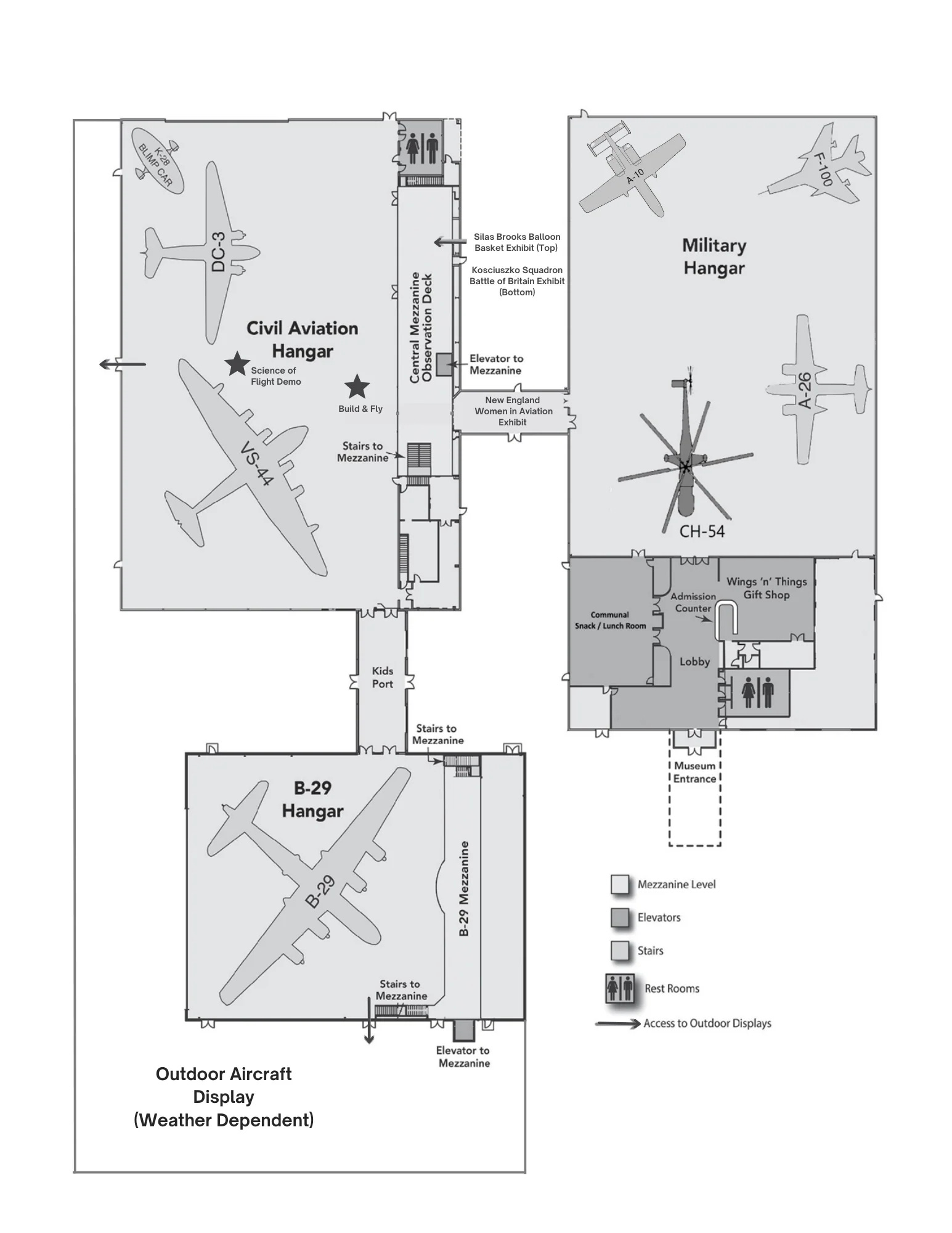
The drive to the museum is a long and winding road that parallels Bradley International Airport. When you arrive, you are roughly 1,000 feet from the runways of Bradley International Airport, and if you play your cards right, you can see planes land and take off quite closely from the parking lot of the museum! The museum consists of three hangars, a civil aviation hangar, a B-29 hangar and a military hangar. When you enter the museum, you will start in the military hangar, and move to the civil aviation hangar and conclude in the B-29 hangar. As these are essentially separate buildings, there are connectors between the buildings and the connectors are all one path. The museum builds upon Connecticut and New England’s history and involvement of producing vintage balloon baskets, WWII fighters, supersonic jets and transatlantic flying boats.


Where Dreams Take Flight: Start at the Military Hangar
You will start here at the museum and the entrance features a Bell 47 Helicopter. If the helicopter looks somewhat familiar, that’s because it was popularized by the hit TV series MASH, as it was used by Army MASH units in Korea for medical evacuation. Around the helicopter, you can start in two directions, I proceeded to move to the museum on the right side first. I started with the P-47 Thunderbolt fighter. While there are planes up front, you will notice around the back that there are exhibits that highlight the plane’s significance in history. In this case, it was the plane’s involvement in the Palm Sunday Massacre in 1943 during one of the many battles of World War II. You will also see numerous stories of the pilots of these planes. If you love history and especially military history? You will love this area. Behind the planes? You will notice red coated volunteers who stand by the planes and allow museum guests of all ages to sit behind the cockpit of these planes. In this hangar, you will also see the massive engines of the planes built locally by Pratt and Whitney. I couldn’t get over how big these engines were! In fact, over 360,000 of these engines were produced locally to the extent where it provided half of the horsepower used by all American air forces in WWII.


Each plane allows museum guests to walk up to examine the cockpit of the plane or even climb in to sit in the cockpit. There are also numerous interactive touchscreens where guests can watch veteran interviews, see photos of the dedication ceremonies and watch the restoration videos under some lively music from the time. And it’s not just WWII planes. Other planes include the B-25 Armament, the AIM-7 Sparrow Air Interceptor Missile that was introduced during the Vietnam War and used extensively during the Persian Gulf War, the A-10A Thunderbolt II also used during the Persian Gulf War, the F-100 Super Sabre fighter bomber - with speeds up to 852 mph at 35,000 feet (can I hop on a flight on one of those?!). Military helicopters are also on display in this area, including the Kaman SH-2F Seasprite - still in use in various countries, but used for search and rescue missions at sea and landing on water if necessary. What stood out for me was reading about the ever evolving technologies of these planes and the need for speed and efficiency that keeps these planes moving faster and stronger.
Fly The American Way: What Does the Ovation Guitar and the K-Max Helicopter Have In Common?
Situated behind the Kaman helicopters showcased in the Military Hangar of the museum is a significant exhibit dedicated to the man and the company that carries his name. An interactive display on Charles Kaman allows visitors to view videos made by volunteers that delve into his biography and legacy, highlighting the challenges he faced that temporarily halted his piloting career and redirected him towards founding his own aircraft company. His journey is relatable to many, particularly when life throws obstacles in the way of your aspirations, and the universal urge to shift towards a new entrepreneurial path emerges. He successfully realized his dream, creating aircraft that transformed the lives of countless pilots and potentially saved many through the planes and helicopters that carry his name. This area truly inspired me as I reflected on my own challenges and broken dreams. Kaman is known for its role in shaping and innovating search and rescue helicopters evolving into the K-Max helicopters in place today, used not just by the military but also commercial customers as well - mostly involving logging, hauling, heavy duty construction and fighting forest fires.


However, the most fascinating aspect of his life to me was that he invented the Ovation guitar based on research of vibration! It turns out that he was a highly skilled guitar player in his younger years, to the extent that he received an offer to join the Tommy Dorsey Band, which he declined in favor of a career in aviation engineering. During his studies on vibration, he linked this knowledge to his passion for guitars and went on to create the Ovation round-back guitar. This design later gained fame among many rock artists, such as Glen Campbell, Paul McCartney, John Lennon, Queen, and Bon Jovi.
Keep Climbing: New England Women in Aviation


In the connecting gallery, you will see an exhibit on the women of New England and their involvement as pilots. Start with the “early pioneers”, where you’ll learn about women like Ruth Law, Grace Pugh, Bernice Perry and other legends who took their passion for flight to the next level. You’ll move through the “Golden Age of Aviation” and learn about women’s impact on aviation during the heart of the Great Depression. Then, “Answering the Patriotic Call” would examine women aviators role in WWII, including the fascinating story of the WASP (Women Airforce Service Pilots), who transported aircraft for use in battles in WWII. Finally, “Blazing New Trials” and “The New Frontier” profiles female pilots in general aviation, commercial aviation, in space, and in the military. One exhibit that struck me was how MIT Professor Dava Newman led a team of engineers and developed the BioSuit, which is a compression suit that clings to the body but also includes biometric sensors that collect essential astronaut data. The form fitting suit is also designed to withstand the rigors of space but removes the bulkiness of older space suits that may restrict mobility. This shows the incredible innovations that women have made alongside men in this industry. Last but not least, there’s an interactive exhibit with a touchscreen where you can read about various women in aviation history, and their stories are truly fascinating. Women will definitely feel inspired walking through this gallery!
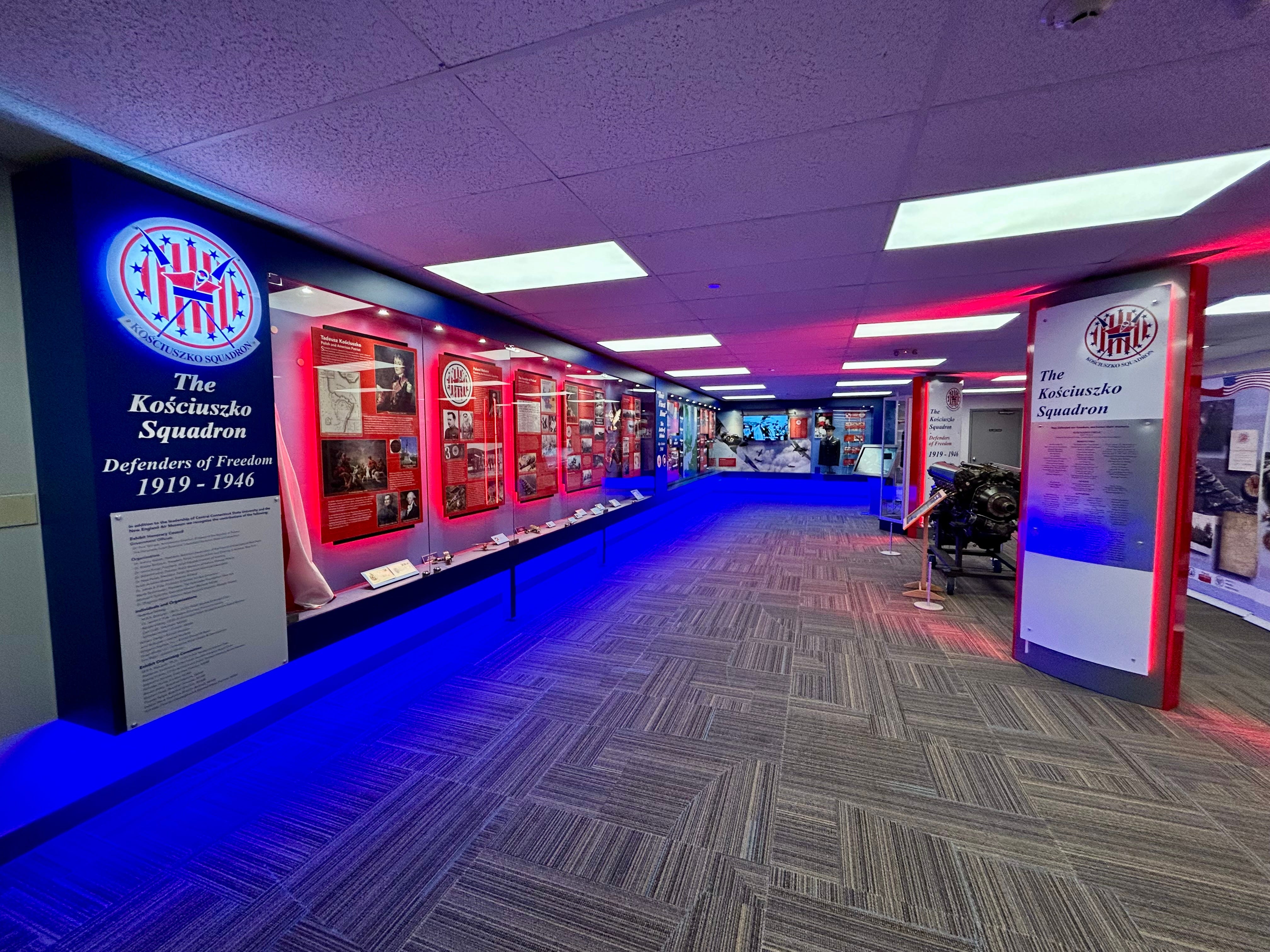
The connecting gallery also has a terrific and very detailed exhibit on the Kosciusko Squadron, and covers 1919-1946. It’s worth a stop to walk through and learn about their involvement in WWII.
Fly the Friendly Skies: The Civil Aviation Hangar


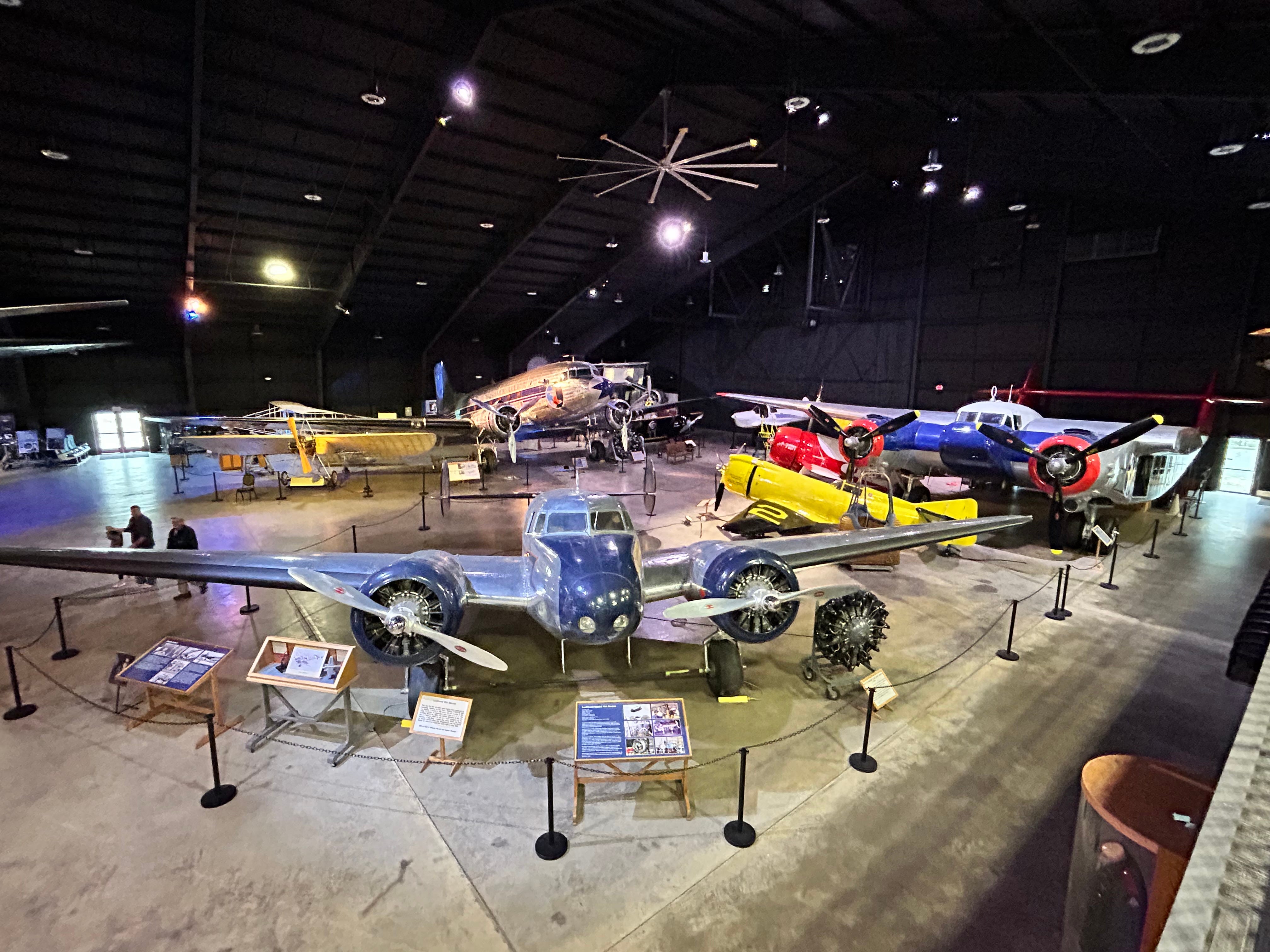
This particular gallery houses numerous passenger airplanes from the early days of aviation. It’s fascinating to see how small these planes are compared to the airplanes were all accustomed to today. When you first walk in the hangar, you’re greeted with the Lockheed Model 10A Electra, the same plane flown by Amelia Earhart that disappeared near Howland Island over the Pacific Ocean in 1937. You’ll also see the inside of a Pan Am Boeing 707 cockpit and numerous small and midsize passenger airplanes. Some military planes are here as well, but mostly involving blimps used to monitor for submarines in WWII. Once again, walk behind the airplanes and you’ll see a mockup of an Eastern Air Lines terminal and a US Navy Blimp exhibit that profiles how blimps and airships were vital instruments in WWI and WWII. Given my love of travel and flying on airplanes, I was struck by the Eastern Air Lines Silverliner and how it resembles what we would consider to be a regional airplane these days but also closely resembles a modern passenger airplane in particular. You’ll also see a massive four engine VS-44 Flying Boat, which helped paved the way for nonstop commercial transatlantic passenger flights, as it was one of three constructed to transport key military personnel and cargo from New York to Ireland. The interesting aspect of these planes has to do with its interior, where the passenger cabins almost resemble that of a train rather than a plane. No “seat belt sign is on” and packed in tight passenger seats here! However, I would imagine flying in those days - pilot or passenger - wasn’t anywhere near as smooth as it is now.
A Symbol of Freedom: The B-29 Hangar and the Tuskegee Airman Hangar
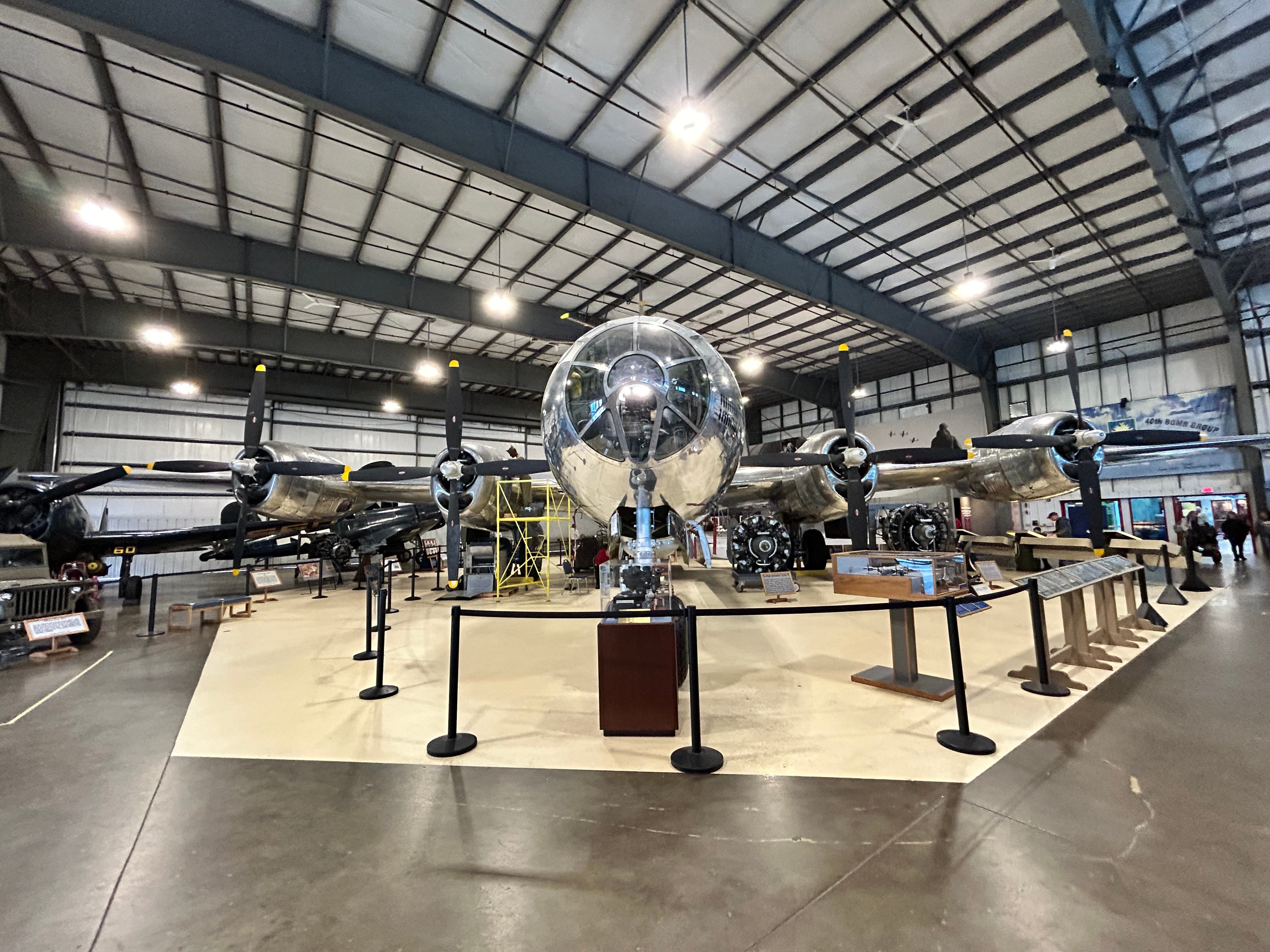
This hangar is just large enough to house the massive four engine Boeing B-29 superfortress bomber, in service during WWII. This particular aircraft is notable for being assembled as it was still on the drawing board through a process that has been come to realization as “concurrency” where a product is conceptualized and assembled at roughly the same time. While the B-29 was built in Wichita, KS, it would make numerous transcontinental flights to the Pacific Theater in WWII.


The other aspect of this hangar was the Tuskegee Airmen Exhibit, which explains the story of the Tuskegee Airmen from the racial attacks and segregation they dealt with to the heroic acts of WWII, their story is always one to learn from with honor and respect. It is worth walking through to see the sacrifices of these brave men, and how they risked their lives not just in battle but at home. The most fascinating aspect to me was not only how we didn’t really learn about the Tuskegee Airmen until roughly 50 years after WWII, but that the name came from a book published long after the war in 1955! You’ll see the stories from the veterans themselves through videos and a theater playing the and see numerous artifacts and uniforms. The video “The Tuskegee Airmen: Their Untold Stories” plays on a loop in the theater facing the exhibit.
Here's Why You Should Visit the New England Air Museum
The word “inspiring” is used quite frequently, but this place truly evokes that phrase. As someone who was born and raised in the Southern New England region of the Northeastern United States, I am well aware of the manufacturing history of New England, as beautiful brick buildings still stand to this day near rivers as reminders of our industrial past. Those industries have moved on, and our region embraced the manufacturing and evolution of aircraft to help shape the direction of aircraft both in the form of travel and in the form of warfare. Lots of trial and error has resulted in one of the safer forms of travel that exists today. I left the museum inspired, especially with the Kaman exhibit, as it showed that a setback in life can set you up for greater things going forward.
The New England Air Museum is located on 36 Perimeter Rd in Windsor Locks, CT, and is adjacent to Bradley International Airport. It is a short connecting Uber/Lyft ride to the Windsor Locks train station with the Hartford Line serving that area. Otherwise, parking at the museum is free of charge. Check the website for hours, admission fees, and for VIP Tours if you’re interested.

Where to Stay near the New England Air Museum

If you’re planning a visit to the New England Air Museum, you’ll want to find a comfortable place to stay nearby to make the most of your trip. One great option is the town of Windsor Locks, which is just a short drive from the museum and offers a variety of accommodations, from cozy motels to well-known hotel chains. Many of these places provide convenient amenities like free breakfast and Wi-Fi, making your stay even more enjoyable. Additionally, Windsor Locks is home to several restaurants and shops, so you can easily grab a bite to eat or pick up any essentials you might need during your visit. If you’re looking for a more unique experience, consider checking out bed-and-breakfasts in the surrounding areas, which often feature charming atmospheres and personalized service. No matter where you choose to stay, you’ll be well-positioned to explore the fascinating exhibits and aircraft at the museum.
Things to Do near the New England Air Museum


If you’re looking for activities near the New England Air Museum, which is conveniently located close to Bradley International Airport, you’ll find plenty to explore in the surrounding area, nestled between Hartford and Springfield. In Hartford, you can immerse yourself in literary history at the Mark Twain House, where the life and works of the famous author come to life through engaging exhibits. Just a short drive away, the Connecticut Museum of Culture and History offers a fascinating glimpse into the state’s rich heritage, showcasing everything from art to historical artifacts. Meanwhile, Springfield boasts a variety of attractions, including the Springfield Museums, a collection of five museums that cover everything from science to fine arts, and the iconic Basketball Hall of Fame, a must-visit for sports enthusiasts eager to learn about the legends of the game. With such a diverse array of options, you’re sure to find something that piques your interest while visiting this vibrant region.