

Well I Was Walking in Pittsburgh
My experience on a walking tour through Pittsburgh's unique architecture, its study of contrasts, and how it reignited my passion for history and storytelling

Pittsburgh is one of those American cities that flies under the radar. It’s a city in the on the western end of the Northeastern United States that is steeped in history, yet is experiencing an incredible rebirth and resurgence. Once referred to as the "Steel City," it played a crucial role during the industrial revolution, emerging as a center for steel production and manufacturing in the late 19th and early 20th centuries. This industrial surge drew a diverse array of immigrants, each adding to the city's distinctive cultural fabric. Today, traces of this dynamic history are evident in its impressive architecture through its majestic structures that dot the landscape in the Golden Triangle. Beyond its industrial legacy, Pittsburgh has evolved into a vibrant hub for technology, healthcare, and education, and its architecture plays a pivotal role in honoring its past and simultaneously shaping its future. Seeing that its architecture is so intertwined with its past, present and future, I decided to put on my walking shoes and “Walk the Burgh” for a walking tour of Pittsburgh’s history through the historic architecture that stands tall today, and I would take away much more than just the history of Pittsburgh.

Walk This Way
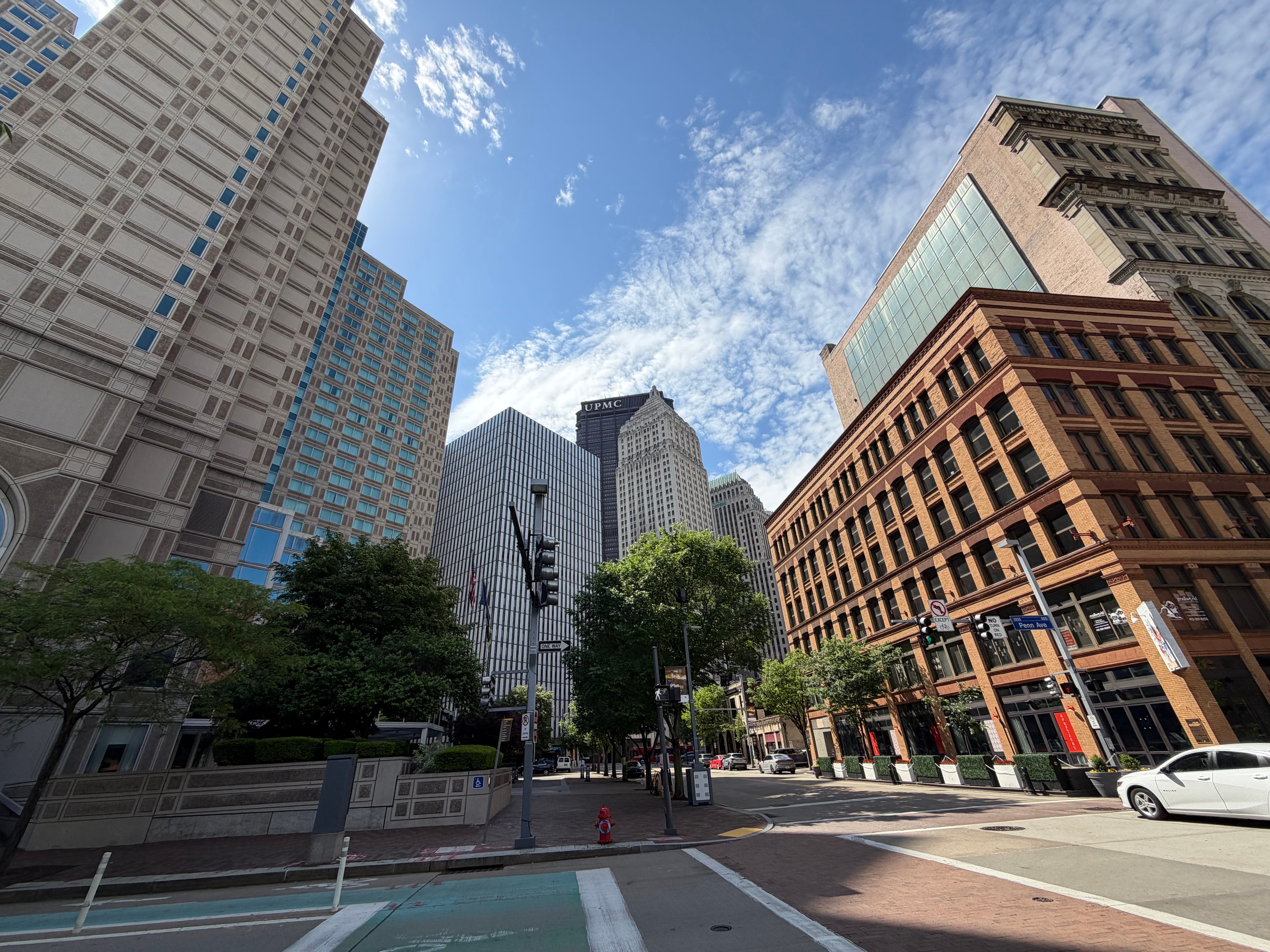
After parking my rental car in a nearby garage, I made my way to the Walk The Burgh location on Penn Ave, where I reviewed and signed a waiver required for participating in the tour. Waivers are standard practice for most, if not all tour operators. After reviewing and signing my waiver, I enjoyed a pleasant conversation with the owner and our tour guide about my hometown and the reasons for my visit to Pittsburgh while we waited for the other guests to arrive. The tour commenced promptly at 11am, with just a small group of two, including myself, alongside the tour guide. Walking tours can vary in size, accommodating either a few participants or larger crowds, and I have experienced both formats. Personally, I favor smaller groups as they create a more intimate and relaxed atmosphere. Our tour guide, Brian, was a friendly former history teacher who happened to live and work close to my home in Southern New England prior to moving back to Pittsburgh. Having once aspired to be a history teacher myself, I felt somewhat of a bond with him, and it made perfect sense to me—what better way to share historical knowledge than through a walking tour focused on history?

Art Deco: A Trio of Buildings Rich in History
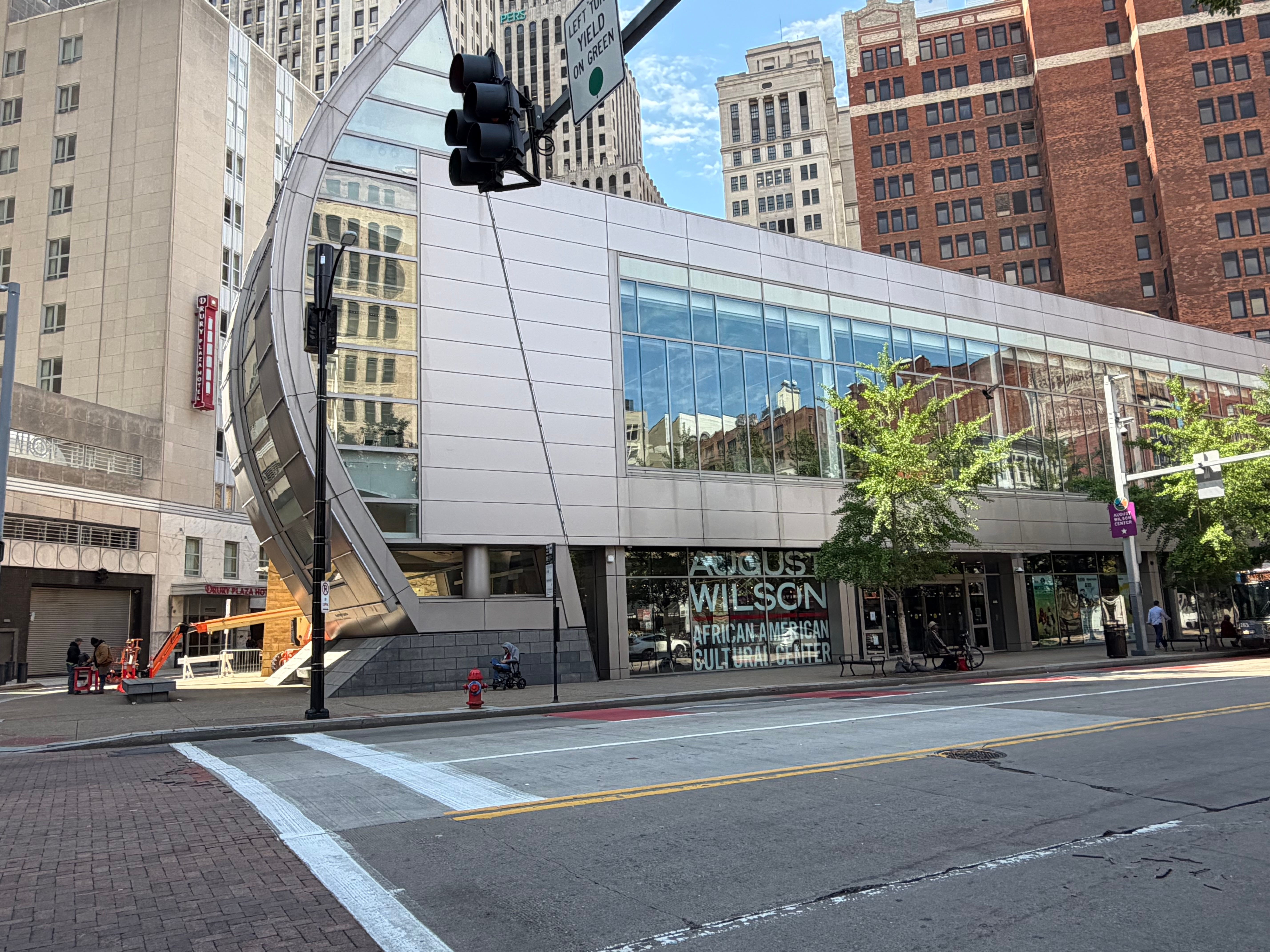
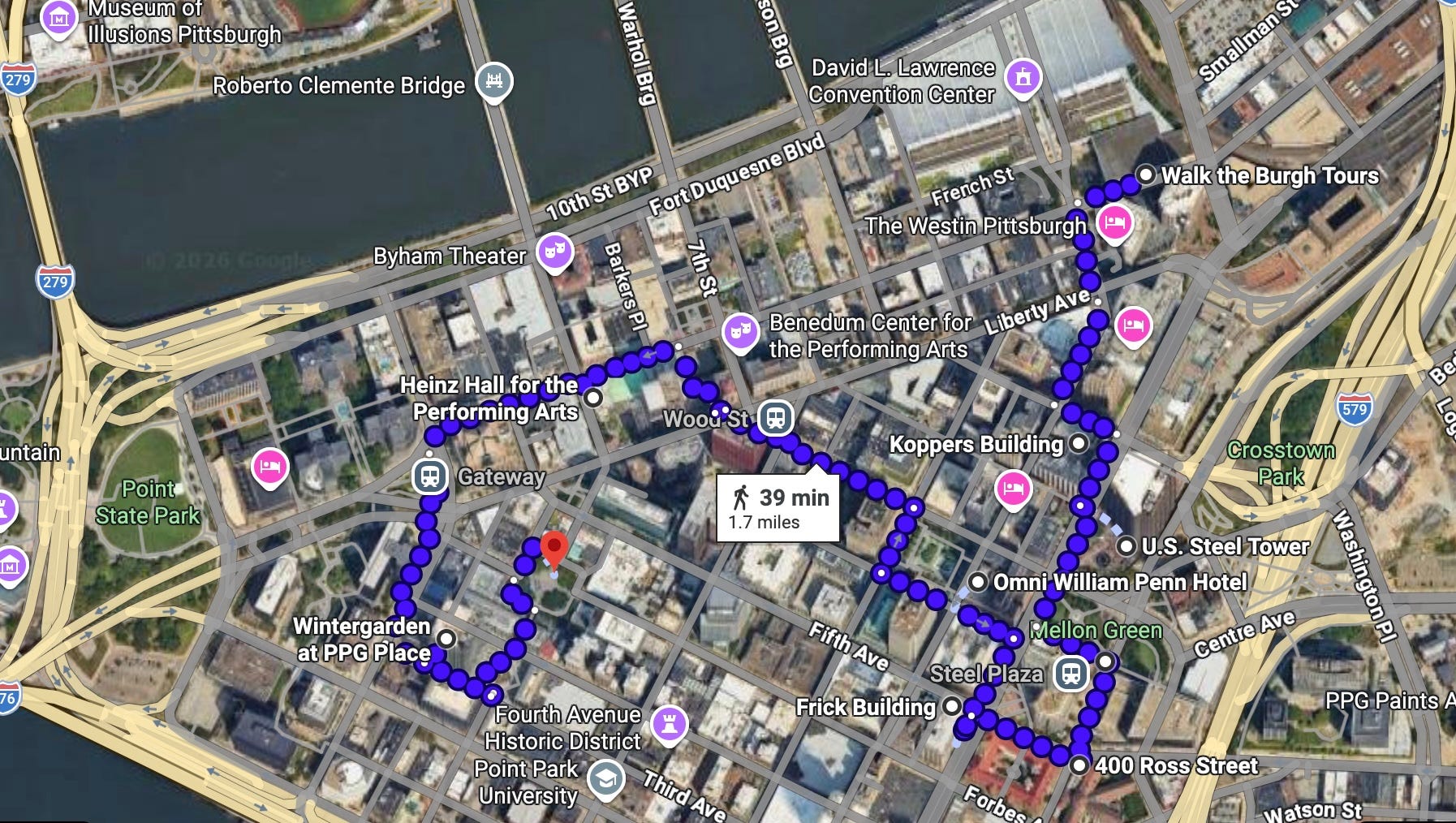
As we started our walk towards our first stop of three Art Deco buildings, we passed the August Wilson African American Cultural Center on Liberty Ave, which was constructed in 2011. The difference between this modern structure and the older buildings around it is quite noticeable, yet they complement each other beautifully and seem to fit together at the same time.
Turning the corner from the August Wilson African American Cultural Center, we find ourselves on William Penn Place, where we’re encouraged to look up at the trio of Art Deco buildings that stand side by side along this street, as well as those directly across from each other on Seventh Ave::
Drury Plaza Hotel: Here’s a fun fact - this modern day hotel once housed the Federal Reserve bank. Constructed in 1935, you can still see traces of its history today, like how the garage door now leads to an underground parking garage.
Gulf Building: Originally built in 1932 as the headquarters for the Gulf Oil Corporation, the building stood as a symbol of the booming oil industry during the early 20th century. The Gulf Building showcases a blend of Art Deco and Beaux-Arts styles, and at one time was the home for offices for Gulf Oil and other businesses.
Koppers Tower: Constructed in 1929 and commissioned by Andrew Mellon, the Koppers Tower stands out with its distinctive Art Deco style on the outside, with its Indiana limestone facade, polished granite base, and a striking copper roof. Koppers Chemical Corporation continues to call this home to this day as its global headquarters.


Concrete and Steel: The US Steel Building
We would walk up Seventh Ave before turning onto Grant St, where we encounter the tallest and largest structure in Pittsburgh - the 64-story US Steel Building. Ironically, US Steel has nearly vanished from the building that carries its name, which now houses UPMC (University of Pennsylvania Medical Center) along with other occupants. I couldn't help but observe that this contemporary style building, although made of steel, had a brown hue that almost resembled rust. This is intentional, as the steel was designed to change color when it comes into contact with oxygen, as well as when subjected to the varying weather conditions of Pittsburgh's four seasons.
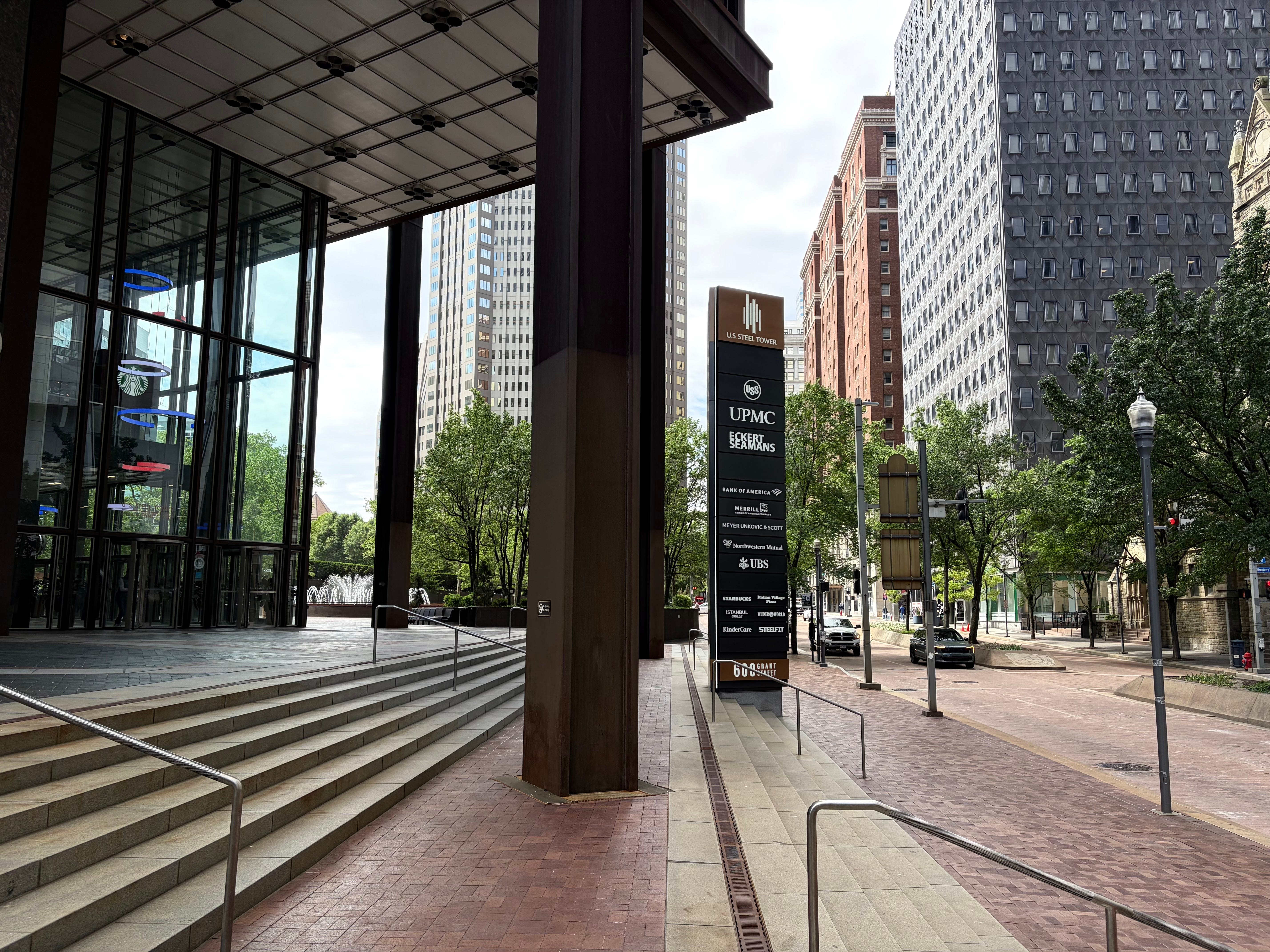
One aspect that intrigued me during the tour was learning about the innovative features incorporated during its construction. BuildingsDB explains it further:
At the time of its completion in 1970 the U.S. Steel Tower incorporated solutions that were quite advanced at the time, these included…an underground wiring system and was one of the first to use fire-resistant liquid-filled columns.
The 18 exterior Cor-Ten steel columns that form the structural frame are hollow and filled with a mixture of water, antifreeze, and rust inhibitor. This system allows the liquid to dissipate heat in the event of a fire, enabling the columns to maintain structural integrity for up to four hours.
Throughout the tour, we would walk through the various city parks that sit in between these large, historic buildings - including the gorgeous Steel Plaza next to the US Steel Building, and the Mellon Green on the way to our next stop.


Another aspect of Pittsburgh’s architecture that struck me was seeing a historic church surrounded by skyscrapers, as it shows yet another stark contrast that compliments each other.


A Taste of Venice and Needing to Looking Up
We would walk down Ross St, then make a turn towards Fifth Ave, where two neighboring structures in Romanesque revival style stand, currently serving as the Allegheny County Courthouse and Jail. These are the oldest surviving buildings in Pittsburgh, completed in 1888. The buildings are linked by a Bridge of Sighs, where those crossing would let out a sigh as they caught a fleeting view of the outside world while moving between the two. This bridge was also inspired by the famous Bridge of Sighs in Venice. I was genuinely amazed when I first laid eyes on this building.


We would continue down Fifth Ave to Grant St, where we would see a collection of buildings inspired by the Chicago style of architecture, among these are the Frick Building and the now Omni William Penn Hotel.


However, the standout for me was the Union Trust Building, which was originally known as the Union Arcade. It was commissioned by industrialist Henry Clay Frick and opened its doors in 1917 as the Union Arcade. Brookline Connection provides a detailed look at what it was originally used for:
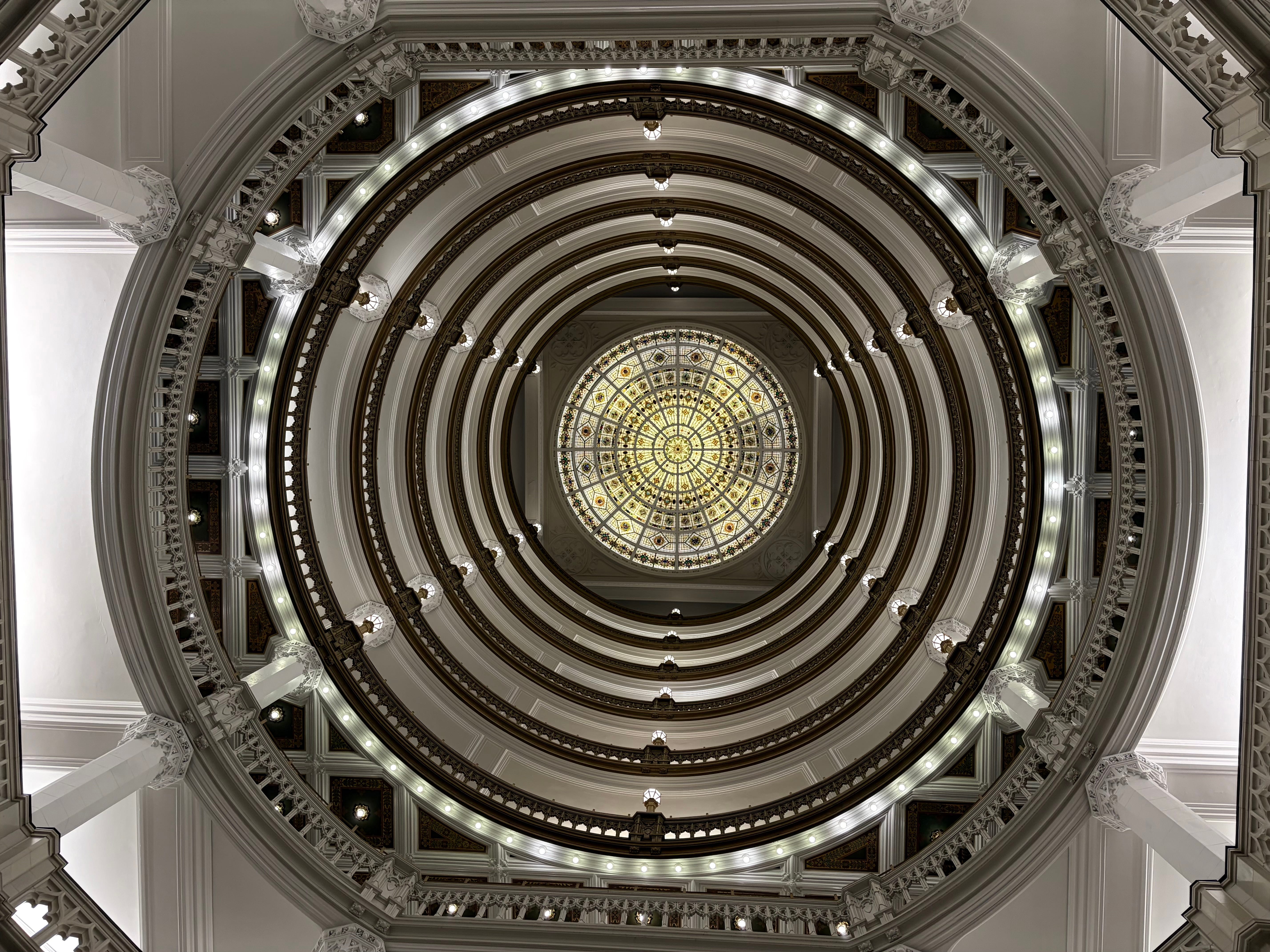
Known originally as the Union Arcade, it featured 240 shops and galleries. It was a precursor to the indoor shopping malls of the present day. The steeply-pitched mansard roof is adorned with terra cotta dormers and ornaments. Atop the roof are two chapel-like mechanical towers. The decorative interior is arranged about a central rotunda, capped by a stained glass dome. The levels above the fourth floor consisted of office space.
Sadly, the Arcade didn’t last long, and in 1923, the Union Trust Bank took over the building, renaming it the Union Trust Building. Over the years, it has seen many updates and renovations, but it still keeps its classy appearance even now.
….the building required a complete overhaul — from removing asbestos from structural supports and maintaining its intricate embellishments to repairing elevators, installing air conditioning and reversing damage from failed efforts to clean its stone exterior. Two years and $100 million in historically sensitive renovations later, the Flemish-Gothic building built in 1917 by Henry Clay Frick has been brought back to life as a 21st-century home for offices, shops, dining and other uses.
In my experience of walking through the interior of the Union Trust Building, it was incredible to see how busy it was, and how gorgeous the interior was - but the true highlight for me was looking up and admiring the breathtaking Central Rotunda.

Walking the Cultural District and Market Square


Our last stops on the tour included walking through the Cultural District, and its history is almost reflective of the city itself, starting as a hub for arts and culture, it became a “red light district” of adult entertainment shops and parlors, but has since been cleaned up and restored to its former glory as Everything Explained Today points out:
Today the 14-square-block area continues to transform and flourish from a red-light district with only two cultural facilities - Heinz Hall and the Convention Center - to a dynamic arts and residential neighborhood with more than fourteen arts venues, including the Pittsburgh Creative and Performing Arts School, public parks and plazas, and new commercial development. The Pittsburgh Cultural Trust applies a holistic approach and vision to urban redevelopment: streetscaping programs, facade restorations, new cultural facilities, public open spaces and art projects.
Our walk continued through Gateway Center Park and made our way to Wintergarden, where we spotted some dinosaurs! Now sure, it’s the amusement park kind, but it works for me. To wrap up our day, we ended at the lovely Market Square, marking the conclusion of our tour.

Takeaways and Should You “Walk the Burgh”?
Study in Contrasts: One major theme I've noticed during this tour is how Pittsburgh's downtown really showcases contrasts, and you can see it in every direction you look. From the sleek modern buildings set against the classic architecture, to the church that proudly stands out amidst the taller structures around it, this city has not only survived but also flourished as it transformed from the 'steel city' to what it is now.
Teaching History through a Tour: Another major takeaway for me was how the tour guide Brian leveraged his background as a history teacher to present history in a really engaging and personable manner during the walking tour. It got me reflecting on this platform and how I've channeled my passion for history and teaching into discovering America through travel. He also brought up several times his vision for a more "vertical" city, where different neighborhoods and cultural areas are better connected. This was mainly about the city's design, which is incredibly walkable, yet sometimes felt a bit disconnected too.


There’s so much more to experience on this tour, and our tour guide was incredibly informative about not only Pittsburgh’s history, but of its potential.
This tour runs rain or shine, hot or cold - so being prepared for the elements is essential. Make sure to check the forecast in advance and plan your attire accordingly. It's important to wear comfortable walking shoes at all times during your visit. The tour spans 2 hours and involves a significant amount of walking. You'll certainly rack up your steps and anticipate gaining a wealth of knowledge about this amazing city. I certainly did!
